


Key Takeaways
- A Nationally Coordinated Criminal History Check is filtered. Police apply spent conviction laws and release policies before disclosure
- Most adult convictions become spent after ten crime-free years, except sexual offences or sentences over six months. Children have shorter limits.
- A Working With Children Check differs. It may consider spent convictions, dismissed charges, juvenile records, and misconduct because it assesses risk.
- Serious traffic offences like drink driving or driving while disqualified usually appear as criminal. Minor speeding stays on your record unless convicted.
- Dispute police check errors through the organisation that processed it. A formal national dispute pathway is available.
Table of Contents
What Offences Go On Criminal Record NSW?
In NSW, a criminal record is essentially a list of offences where you have been found guilty and a conviction has been recorded by a court, and in 2026 that distinction still matters enormously for jobs, visas, and licence-based work. It will also show serious traffic offences that are treated as crimes, such as drink driving or driving whilst disqualified. Minor infringement matters handled by penalty notice are not usually listed on your criminal record, although they do appear on your driving history.
Two points matter for whether something ends up on your record:
- The court outcome: if the court records a conviction, it is part of your criminal record. Non-conviction outcomes can be treated differently, although some checks may still disclose them depending on purpose and release policies.
- The type of check: a standard national police check is not the same as a Working With Children Check. Each is governed by different rules on what can be released.
Summary vs indictable offences
- Summary offences are dealt with in the Local Court.
- Indictable offences can be heard in the District or Supreme Court, although many less serious indictable matters are finalised summarily.
Both types can create a conviction that appears on a criminal record if the court convicts you. The difference usually affects the court and maximum penalties rather than whether a conviction is recorded.
A court may find you guilty and record a conviction with a penalty. In limited cases the court can deal with you without recording a conviction, for example by using a non-conviction order. Whether a non-conviction outcome is disclosed on a police check depends on the spent convictions law and the purpose filters applied by police.
What Is A Criminal Record NSW?
A criminal record is created when NSW Police and the courts record outcomes of criminal proceedings. NSW Police maintain criminal history information, and checks are coordinated nationally through the Australian Criminal Intelligence Commission for the Nationally Coordinated Criminal History Check system. Police apply spent convictions laws and release policies before disclosing anything for employment or licensing checks.
Once a conviction becomes spent, there are limits on who can ask for or receive it. In NSW, the Criminal Records Act 1991 sets out when a conviction becomes spent and the general rule that you do not have to disclose a spent conviction, subject to specific exceptions.
Agencies involved
- NSW Police hold criminal history information and issue NSW National Police Certificates when you apply through police.
- ACIC runs the national system that routes applications and ensures uniform vetting against spent convictions law and release policies.
Worried About Your NSW Criminal Record?
Our team provides clear, practical advice on police checks, spent convictions and what employers will actually see.
Contact Now to Book Your Personalised Strategy
Which Offences Can Give Me A Criminal Record?
Any offence that results in a conviction recorded by a court can go on your record. Examples include:
- Assault, theft, fraud and property damage under the Crimes Act 1900
- Drug possession or supply offences under the Drug Misuse and Trafficking Act 1985
- Serious traffic crimes such as drink driving, dangerous or negligent driving causing harm, and driving whilst disqualified under the Road Transport Act 2013
- Breach of an Apprehended Violence Order, which is a criminal offence, even though the AVO itself is not a conviction.
Drink driving offences are set out in the Road Transport Act and, when you are convicted, they form part of your criminal record.
What Information Is Disclosed In A Criminal Record?
What is disclosed depends on the check. On a national police check the outcome you see is either No Disclosable Court Outcomes or Disclosable Court Outcomes. A DCO may list charges, court convictions with penalties, findings of guilt with no conviction, court appearances, good behaviour bonds or other court orders, matters awaiting court, warrants, warnings and traffic offences. Police must apply spent convictions law and their release policies based on the stated purpose of your check.
Some checks go further. For example, the Working With Children Check can consider convictions that are spent, charges whether heard, unheard or dismissed, juvenile records and relevant misconduct. That is because it is a risk-assessment clearance, not a simple criminal record printout.
In practice, the information that might be disclosed can include:
- Convictions and the sentence or penalty
- Findings of guilt without conviction
- Court orders such as bonds or community-based orders
- Pending matters listed for hearing
- Warrants or warnings that police decide are relevant
- For certain clearances, non-conviction information and disciplinary findings where the law allows it.
Standard police checks do not automatically list dismissed or withdrawn charges, but they may be disclosed as part of DCO items or for special purpose checks if relevant to the risk being assessed and permitted by law. Always check the purpose and category of the check being requested.
Need Help Reading a Police Check?
We explain National Police Checks, Working With Children Checks and how to dispute errors.
Talk To Our Expert Lawyer Now
What Do Background Checks Show In NSW?
A background check is not a single product. The most common are:
- Nationally Coordinated Criminal History Check through NSW Police or an ACIC accredited body.
- Working With Children Check through the NSW Office of the Children’s Guardian.
- NDIS Worker Check for certain disability roles.
Each has different disclosure rules. Police will filter results under spent convictions legislation and information release policies. Purpose matters. For example, a check done for a teacher role might be vetted differently from a general employment check.
What Shows Up On A Criminal Record Check NSW?
On a standard national police check, you will either receive No Disclosable Court Outcomes or a list of Disclosable Court Outcomes. A DCO may include charges, convictions and penalties, findings of guilt with no conviction, pending matters, bonds and related orders, or traffic offences where disclosable.
What Do Employers See On A Police Check?
Employers see the filtered result that police release for the stated purpose of the check. Spent convictions are generally not disclosed, unless an exception applies. Employers receiving WWCC or similar suitability clearances are not given a list of offences. Instead, they get a clearance or bar result based on a broader assessment that can take non-conviction information into account.
Challenging Or Disputing Police Check Results
If your check contains a mistake or unfair disclosure:
- Contact the accredited body or police agency that issued the check and lodge a dispute.
- The dispute is referred to the relevant police agency to investigate and correct if required.
- Outcomes are communicated through the body you applied with.
Do Traffic Offences Go On A Criminal Record?
Whether a traffic offence ends up on your criminal record depends on how serious it is and how it’s dealt with. Serious offences are usually treated as crimes, while minor ones often stay on your driving history only. The table below breaks down the difference.
| Type of traffic matter | Where it usually appears | When it may show on a criminal record |
|---|---|---|
| Serious traffic offences (e.g. drink driving, dangerous/negligent driving causing harm, driving whilst disqualified) | Criminal record + driving record | If you are convicted, these offences are recorded as criminal entries. |
| Minor infringements (e.g. low-level speeding) | Driving record (infringement history) | Normally only on the driving record. If you elect to go to court and are convicted, a related court outcome may appear. |

Is Speeding A Criminal Offence In NSW?
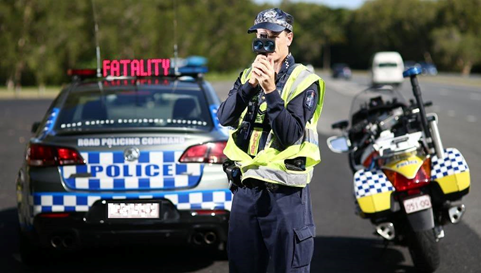
General speeding infringements are usually handled by penalty notice and managed through your driving record rather than your criminal record. Speeding can become a crime when the conduct crosses into offences like dangerous driving or when it is prosecuted in court and results in a conviction. Serious cases can lead to charges under the Road Transport Act and will show on your criminal record if you are convicted.
Do Fines Go On Criminal Record NSW?
Usually no. Most infringement notices you pay without going to court do not create a criminal conviction and stay on your driving record only. If you elect to have the matter heard in the Local Court, or police issue a court attendance notice, any conviction the court records can appear as a disclosable court outcome on a criminal record check.
Serious traffic offences are prosecuted in court and are typically recorded if convicted. Examples include drink or drug driving, driving while disqualified or suspended, police pursuit, street racing, and driving at a speed or in a manner dangerous. High-level speeding can be criminalised when charged as “speed/manner dangerous,” or when a very high excess speed ends up before the court and a conviction is entered.
Does Drink Driving Give You A Criminal Record?
Yes, if the court convicts you of a Prescribed Concentration of Alcohol (PCA) offence or related drink driving offence under the Road Transport Act, that is a criminal offence. A conviction will be part of your criminal record and may also trigger an Alcohol Interlock Order in appropriate cases.
Do Criminal Records Expire In NSW?
They do not exactly expire, but many convictions become spent after you complete a crime-free period. For adults, the period is generally 10 years from the date of conviction, provided there is no further conviction for an offence punishable by imprisonment during that time. A conviction becomes spent automatically once the conditions are met. There are exceptions for particular offences and sentences, and special rules for children.
Once a conviction is spent, the general rule is that you do not have to disclose it and it must not be disclosed to others, subject to exceptions for specific roles and checks.
Are Criminal Records Public In NSW?
Your criminal record is not publicly available. A police check generally requires your informed consent and is released for the specific purpose you nominate. Police and certain government agencies may access records for law enforcement and other lawful purposes. Unauthorised disclosure of spent convictions is restricted by law.
Arrests without a charge are not typically listed on a standard national police check. However, some checks may include pending charges or court listings, and purpose-based clearances like the Working With Children Check can consider non-conviction information in a risk assessment.
Want To Keep A Conviction Off Your Record?
Ask us about non-conviction options, spent convictions and tailored court strategies.
Get Expert Legal Help Today
What Is A Spent Conviction?
A spent conviction is a conviction that, after a crime-free period, is not generally required to be disclosed and is not to be disclosed by others. In NSW, the Criminal Records Act 1991 explains when a conviction becomes spent and the consequences. In broad terms:
- Adult convictions can become spent after 10 crime-free years.
- Children usually have a shorter period.
- Sexual offences, convictions resulting in more than six months imprisonment, and convictions against corporations are excluded.
- There are exceptions where disclosure is still authorised for certain jobs or licensing schemes.
If a conviction is spent, you generally have the right not to disclose it and others are generally restricted from disclosing it, except in defined situations.
Convictions That Can Never Be Spent
Under NSW law, convictions are not capable of becoming spent where
- the person was sentenced to more than six months imprisonment,
- for sexual offences,
- or where the conviction is against a corporate body.
These exclusions are important for planning career or licensing pathways.

What Are The Consequences Of Having A Criminal Record In NSW?
A criminal record can affect:
- Employment: many roles ask for a police check. Employers must still apply fairness and relevance, but disclosures can impact hiring decisions.
- Licensing and registrations: licences in security, teaching, childcare, disability work and similar areas often require clearance checks that assess broader risk, not just convictions.
- Travel: some countries ask for police certificates or ask about convictions on visa forms. Requirements vary by destination, so you should check the specific embassy or consulate guidance and plan ahead.
- Insurance and tenancy applications: some applications ask consent for background checks.
- Sentencing for new matters: courts can consider your record and, in limited circumstances, some spent matters may be lawfully considered.
Can You Travel Overseas With A Criminal Record In Australia?
Many people with convictions travel without issues, but it depends entirely on the country and the nature of the record. Some destinations require police certificates or ask about convictions involving violence, drugs or dishonesty. Applications may be refused if the offence triggers their character or suitability tests. As rules change, confirm the current requirements with the relevant embassy before you book.



















































 FREE CONSULTATION
 CALL NOW 1300 274 652

 1300 274 652
 BOOK NOW