
Key Takeaways
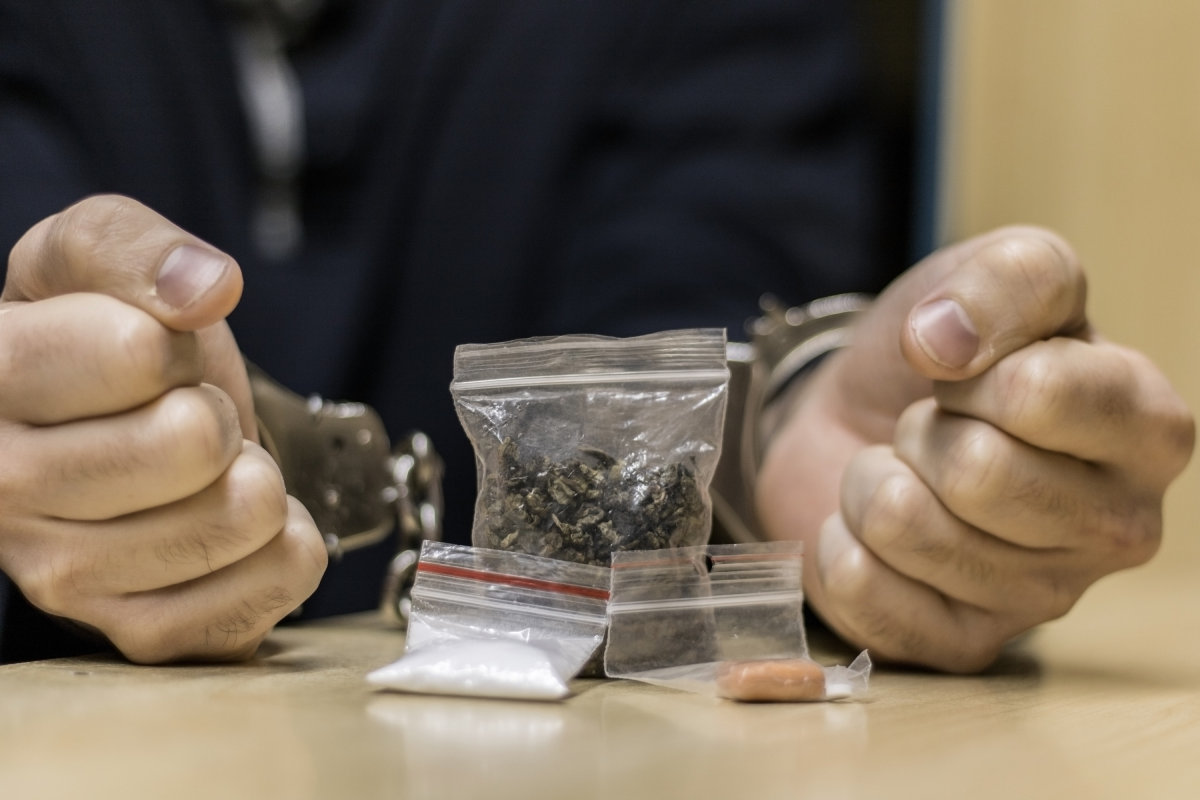
- NSW drug offences fall into possession, supply, manufacture, cultivation and commercial supply, each with different maximum penalties.
- Penalties depend on drug type, quantity thresholds, alleged role and criminal history, ranging from diversion to full-time imprisonment.
- Quantity bands like traffickable, indictable, commercial and large commercial drive whether matters stay Local or move to District Court.
- Defences often focus on possession, knowledge, unlawful searches, chain of custody and reducing supply allegations to personal use.
- Diversion and caution schemes, including cannabis cautions and MERIT, can keep some first-time offenders out of criminal convictions.
Table of Contents
List Of Drug Charges And Sentences NSW
In New South Wales, drug offences are grouped into categories like possession, supply, manufacture, cultivation and commercial supply under the Drug Misuse and Trafficking Act 1985. Each carries its own maximum penalty, from fines and community-based orders through to full-time imprisonment for serious supply and commercial supply. Penalties turn on the type and quantity of drug, the alleged conduct and your record, so understanding how different charges and sentencing ranges work is critical to assessing your real legal risk.
Main NSW Drug Offence Categories And Penalty Direction y
| Offence category | Core description | General penalty direction | Key sentencing considerations |
|---|---|---|---|
| Possession | Having a prohibited drug in your custody and control for personal use | Fines, Conditional Release Orders, diversion, possible jail in repeats | Quantity, type of drug, prior record, prospects for rehabilitation |
| Supply | Selling, giving or otherwise supplying drugs, including social supply | Higher penalties than possession, real risk of imprisonment | Quantity band, profit motive, supply to young people, role in network |
| Commercial supply | Supplying at commercial or large commercial quantities | Very high maximums, strong likelihood of full-time imprisonment | Scale of dealing, organisation, links to wider networks |
| Manufacture | Producing prohibited drugs in a lab or clandestine set up | Serious indictable offences, often District Court and prison risk | Sophistication of set up, safety risks, volume and purity |
| Cultivation | Growing cannabis or other prohibited plants | Penalties range from fines to jail depending on quantity and intent | Number of plants, commercial vs personal, indoor vs outdoor |
What Are The Drug Possession Laws In NSW?
Drug possession in New South Wales means having a prohibited drug in your custody and under your control, with knowledge of its presence. Possession can be exclusive, such as drugs inour pocket, or joint, such as a shared bag at a party, if you and others know about and control it. Simply being close to drugs is enough even though drugs in your car, bedroom or personal items often support an inference of possession.
The main framework for possession is in the Drug Misuse and Trafficking Act 1985. Police must prove three elements beyond reasonable doubt: that the substance was a prohibited drug, that you had it in your custody or control, and that you knew or should have known it was there. In some cases, constructive possession can arise where drugs are stored elsewhere but you retain control through a key, a code or instructions to another person. Understanding how possession is defined is critical because it affects whether you can argue the drugs belonged to someone else, that you did not know they were there, or that police cannot reliably link you to the substance.
Need Immediate Help With Drug Charges In NSW?
Our criminal lawyers explain your exact charges, likely penalties, and defence options in clear Australian English.
Get A Free Case Assessment
What Are The Penalties For Minor Drug Possession Charges In NSW?
For small, personal use quantities of a prohibited drug, NSW courts usually focus on fines and custodial penalties especially for first offences. Outcomes can include a fine, a Conditional Release Order (CRO) with or without conviction, or in some cases, a dismissal under section 10 of the Crimes (Sentencing Procedure) Act 1999, which avoids formal conviction being recorded.
There are also diversion options outside the traditional court process. For cannabis, eligible people may receive a warning or a formal caution under the Cannabis Cautioning Scheme, which can require information or counselling rather than a criminal charge. For some low level possession matters involving drugs, police may use programs such as the Early Drug Diversion Initiative, which links an on-the-spot fine to a brief health intervention instead of prosecution. Penalties are still influenced by the type of drug, the amount and your record. Small quantities of cannabis, MDMA or cocaine may be treated more leniently than repeated possession of more harmful substances or quantities near traffickable levels. Early legal advice can improve the chances of diversion or a non-conviction outcome.
What Are The Charges And Penalties For Drug Supply In NSW?
Drug supply in NSW is mainly dealt with under section 25 of the Drug Misuse and Trafficking Act 1985 (NSW). Supply is defined broadly and can include selling, giving drugs to friends, or knowingly taking part in a supply arrangement. A person found with more than the traffickable quantity can also face deemed supply, where the law presumes the drugs were held for supply unless you prove they were for another purpose, such as personal use.
The quantity of the prohibited drug is a key driver of both the charge and potential penalty. NSW law uses threshold quantities such as small, traffickable, indictable, commercial and large commercial amounts. As quantities move up these bands, the maximum penalties increase significantly and matters are more likely to be heard in the District Court with a real risk of imprisonment. Courts pay particular attention to profit driven dealing, supply to young people and supply in organised groups. There is also an offence of ongoing supply under section 25A, which targets repeated dealing over a 30 day period and carries very high maximum penalties. Even at lower levels, a conviction for drug supply is treated seriously and can affect travel, employment and professional opportunities.
What Is The Offence Of Drug Trafficking And Its Maximum Sentence?
In everyday language, drug trafficking refers to dealing in drugs as an ongoing business, often at commercial or large commercial levels, rather than simple one off supply. In NSW, trafficking conduct is usually prosecuted as higher level supply or ongoing supply under the Drug Misuse and Trafficking Act 1985 (NSW). At a federal level, trafficking language is used for importing, exporting and dealing in border controlled drugs under the Commonwealth Criminal Code.
Maximum sentences for trafficking type offences in Australia are very high. Large scale supply or importation of serious drugs like heroin, ice or cocaine can carry maximum penalties of 20 years, 25 years or even life imprisonment, depending on the legislation, the quantity and whether the charge is state or Commonwealth. These maxima reflect the strong emphasis on deterrence and community protection in serious drug cases. Sentencing is heavily influenced by aggravating factors. Penalties increase where trafficking is linked to organised crime, involves weapons or violence, targets children or vulnerable people, or uses sophisticated methods such as encrypted communications and sham companies. By contrast, evidence of addiction, coercion or a minor role can sometimes support a sentence at the lower end of the available range.
How Can You Defend A Drug Charge In NSW?
Defending a drug charge in NSW usually starts with a careful review of the evidence and procedure. Common strategies include challenging whether police had lawful grounds to stop, search or arrest you, testing the accuracy of any drug analysis, and questioning the chain of custody to ensure the substance seized is the same one tested. Where several people were present, you may dispute possession or knowledge, or argue that the amount was for personal use rather than supply.
An experienced criminal lawyer can negotiate with police or the Director of Public Prosecutions about the appropriate charge, seek to have more serious counts withdrawn, or present material that supports a plea to a lesser offence. In suitable cases, your representative can ask the court to deal with the matter by way of a section 10 dismissal or Conditional Release Order without conviction, especially for low level, first time offending. Because outcomes range from diversion to full time imprisonment, getting early legal advice is critical. Our team can assess your case, explain realistic options and work to have the charge withdrawn, downgraded or dismissed wherever the law and evidence allow.
Worried About Jail Or A Drug-Related Criminal Record?
We prepare tailored submissions and supporting material to pursue non-conviction outcomes where appropriate and minimise sentencing risk.
Talk To A Drug Defence Lawyer
What Behaviours Constitute A Drug Offence In NSW?
NSW drug laws capture a wide range of behaviours involving prohibited drugs and plants. Key offence types include:
- possession for personal use,
- supply to others,
- trafficking or ongoing supply,
- manufacture in a laboratory or clandestine set up,
- and cultivation of cannabis or other prohibited plants.
- It can also be an offence to knowingly take part in someone else’s supply operation
- or to assist with storage, transport or handling money linked to drug dealing.
Everyday situations can lead to charges. Examples include:
- keeping ecstasy tablets for friends in your bag,
- sharing cocaine at a party,
- growing cannabis in a backyard or hydroponic set up,
- or allowing your premises to be used for drug manufacture.
The seriousness of any charge depends heavily on intent and quantity. Personal use of a small amount is treated differently from commercial, profit driven dealing, and higher threshold quantities trigger more serious offences and sentencing ranges. Understanding how your alleged behaviour fits within these categories is essential when assessing risk, possible defences, diversion options and likely sentencing outcomes.
What Is The Drug Misuse And Trafficking Act 1985 (NSW)?
The Drug Misuse and Trafficking Act 1985 (NSW) is the main statute regulating illegal drugs in New South Wales. Its purpose is to prohibit the manufacture, supply, possession, cultivation and use of specified prohibited drugs and plants, and to give police and courts powers to investigate and sentence drug related crime. The Act provides the framework that underpins most NSW drug charges and sentences.
Common offences under the Act include drug possession, supply and deemed supply, ongoing supply, cultivation of prohibited plants such as cannabis, and manufacture of prohibited drugs in laboratories or clandestine set ups. The Act also contains offences relating to drug premises and certain precursor substances. Schedules to the Act list the substances defined as prohibited drugs and set out the quantity thresholds that determine whether an amount is small, traffickable, indictable, commercial or large commercial. These quantities are central to how police frame charges and how sentencing ranges escalate in more serious cases.
What Are Prohibited Drugs In NSW?
In NSW, a prohibited drug is any substance listed in Schedule 1 of the Drug Misuse and Trafficking Act 1985 (NSW), other than a prohibited plant. This schedule covers well known illicit drugs as well as a range of newer synthetic substances. If a substance appears in the schedule, possessing, using, supplying, manufacturing or cultivating it can lead to criminal charges.
Common examples of prohibited drugs include cannabis, MDMA or ecstasy, cocaine, heroin, methylamphetamine (ice), LSD and some prescription type medications when held or supplied without authority. The Act also covers various synthetic or designer drugs, which may be listed individually or captured through broader chemical descriptions designed to keep pace with changing drug markets. Each prohibited drug has associated quantity thresholds in Schedule 1, which affect whether a case is treated as minor possession, standard supply or commercial trafficking and influence the maximum penalties available to the court.

What Are The Diversion And Caution Schemes For Drug Offenders In NSW?
NSW has several diversion and caution schemes aimed at treating some low level drug use as a health issue rather than always prosecuting in court. The Cannabis Cautioning Scheme allows police, in defined circumstances, to issue a formal caution to adults found with small amounts of cannabis instead of charging them. Cautions can include information on treatment and, for repeat cautions, a requirement to attend an assessment or counselling session.
Beyond cannabis, programs such as the Early Drug Diversion Initiative (EDDI) and the Magistrates Early Referral Into Treatment (MERIT) scheme provide additional pathways. EDDI gives police the option to issue an on the spot fine linked to a brief health intervention for certain low level possession offences, as an alternative to court. MERIT allows eligible defendants in the Local Court to engage in structured drug treatment while their matter is adjourned, with progress reported back to the magistrate. These schemes aim to reduce reoffending, address underlying dependency and reserve the harshest criminal penalties for more serious or repeated drug offending.
Want To Know If Diversion Or Treatment Programs Apply To You?
We assess your eligibility for cautioning, MERIT and other diversion schemes so you can address dependency and avoid unnecessary court penalties.
Book A Confidential Consultation






















































































 1300 CRIM LAW
 Book a Free Consult
 1300 274 652
 BOOK NOW