
Key Takeaways
- Summary offences are less serious matters usually held without a jury in the magistrates or local courts. In NSW, they are held in the local courts.
- NSW local courts sentencing on summary matters is generally capped at 2 years per offence and 5 years in total, across multiple offences.
- Many jurisdictions let some indictable offences to be tried summarily if legal thresholds are met and if an election is made under NSW Table 1 and Table 2 scheme.
- Time limits to start summary charges exist and differ by state. It is 6 months in NSW, 12 months in Victoria and Queensland, unless exceptions apply. Western Australia commonly uses 12 months for simple offences.
Table of Contents
What Is A Summary Offence?
A summary offence is a less serious criminal charge that is dealt with in the local or magistrates court by a magistrate, rather than a judge and jury. These hearings are typically shorter, use simplified procedures, and aim to resolve matters promptly. If you plead not guilty to a summary charge, the magistrate hears the evidence and decides the case.
Here are some common features of summary matters:
- Heard in a lower court, not a jury trial
- Usually lower maximum penalties compared to indictable offences
- Streamlined procedure and faster timeframes
- Often strict time limits on when charges must be filed
Historically, summary jurisdiction to resolve minor criminality efficiently, leaving juries for serious crimes. Australia largely follows that approach with each state legislation setting the detail.
Examples Of Summary Offences You Should Know
Across Australia, typical summary offences include public order and lower level property or traffic matters. In New South Wales, a number of day-to-day charges sit in the local court, for example, offensive conduct or obscene exposure under the Summary Offences Act 1988 and many traffic or minor drug possession charges.
Here are illustrative NSW examples and how they are handled:
- Offensive conduct and language: Usually charged under the Summary Offences Act 1988, listed and heard in the local court.
- Low level shoplifting (larceny or low value): Still a crime under the Crimes Act 1900. However, lower value larceny can be finalised summarily through NSW’s table system.
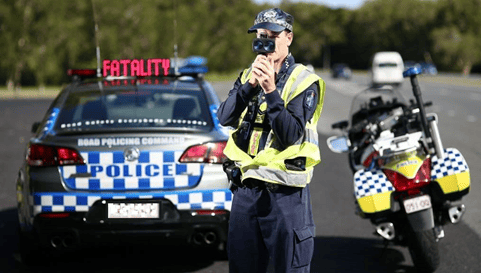
- Traffic infringements like speeding: Usually dealt with by penalty notice but you can elect to take the fine to the local courts where it is heard summarily.
Charged With A Summary Offence In NSW?
Our team gives clear, practical guidance on your options in the Local Court.
Contact Now to Book Your Personalised Strategy
What Are Summary Offences In Australia?
At a national level, the pattern is similar: minor offences proceed in Magistrates Courts with no jury. Each state has its own statutes that define summary offences and court powers.
- NSW has the Summary Offences Act 1988 and NSW Criminal Procedure Act 1986 for process.
- Victoria has the Summary Offences Act 1966 and Criminal Procedure Act 2009.
- Queensland has the Summary Offences Act 2005 and Justices Act 1886.
- Western Australia largely classifies simple offences under the Criminal Procedure Act 2004 and associated laws.
Summary Offences In Queensland (QLD)
Queensland law uses the term simple offences for most summary matters. The Summary Offences Act 2005 contains many public order offences, and the Criminal Code allows certain indictable charges to be heard summarily in the Magistrates Court if thresholds are met under s 552A. Those provisions are designed to keep appropriate matters out of the District Court.
The Justices Act 1886 sets the usual time limit for filing a complaint for a simple offence at 1 year, with a 2-year period in some discontinued-indictable scenarios.
Need Quick Help Before Your First Court Date?
We explain the process, likely outcomes, and how to minimise the impact on your record.
Talk To Our Expert Lawyer Now
Summary Offences In Western Australia
In Western Australia, the Magistrates Court deals with simple offences and with some indictable offences that legislation allows to be dealt with summarily. The WA Criminal Procedure Act 2004 sets out the criminal process in the Magistrates Court, including timing and forms. Guidance from the Magistrates Court confirms its role as the court of summary jurisdiction. WA’s time limit to commence proceedings for a simple offence is 12 months unless another statute specifies otherwise
Summary Offences (NSW)
In NSW, summary offences are finalised in the Local Court. There is no jury, and the magistrate decides guilt and sentence. The Local Court’s jurisdiction generally caps sentences at 2 years per offence and 5 years total when dealing with multiple offences at once. That cap also affects some indictable offences that are dealt with summarily under NSW’s Table system.
The Summary Offences Act 1988 (NSW) still contains a range of public order offences. Some categories, such as knife possession, were moved into the Crimes Act 1900 in 2024 with the creation of new offences s 93IB and s 93IC, which are Table 1 indictable offences that can be tried in the Local Court unless there is an election to proceed on indictment.
Time limit in NSW: prosecution of most summary offences must begin within 6 months of the alleged offence unless legislation provides otherwise.
Which Court Deals With Summary Offences?
| State or Territory | Court that hears summary matters | Notes |
|---|---|---|
| NSW | Local Court or NSW | Handles most criminal matters including summary and some indictable matters dealt with summarily. |
| Victoria | Magistrates Court of Victoria | Summary offences and many indictable offences triable summarily |
| Queensland | Magistrates Court of Queensland | Simple offences and indictable offences heard summarily |
| Western Australia | Magistrates Court of WA | Simple offences and indictable offences heard summarily |
Are Summary Offences Heard By A Jury?
No. Summary charges are decided by a magistrate sitting alone rather than a jury. The matter is heard in the Local Court or Magistrates Court. Witnesses can be called and cross examined, exhibits tendered, and legal submissions made. The prosecution must still prove the elements beyond reasonable doubt. If contested, the magistrate delivers findings and reasons; if proved, sentencing follows according to statute and relevant guidelines.
Unsure If Your Charge Is Summary Or Indictable?
Get tailored advice on where your case will be heard and what that means for penalties.
Get Expert Legal Help Today
What Is The Difference Between Summary And Indictable Offences?
Use this snapshot to see how summary and indictable offences differ in NSW. It highlights where cases are heard, who decides them, key procedural features, penalty ranges, and typical time limits. Scan the examples to understand which matters stay in the Local Court and which proceed to higher courts today.
| Topic | Summary offences | Indictable offences |
|---|---|---|
| Examples | Offensive conduct, low value larceny, many driving matters | Robbery, sexual assault, serious drug supply |
| Where heard | Magistrates or Local Court | District or Supreme Court, unless triable summarily |
| Decision maker | Magistrate | Jury for trial, judge for sentence |
| Procedure | Streamlined, faster | More formal, longer timelines |
| Maximum penalties in NSW | Generally up to 2 years per offence, 5 years total in Local Court | Often higher statutory maximums |
| Time limits to start a charge | Strict, for example 6 months in NSW | Usually no short limitation period |
Indictable Offences That Can Be Tried Summarily By The Prosecution’s Election
Several jurisdictions allow some indictable offences to be heard in the summary jurisdiction.
- NSW: The Criminal Procedure Act 1986 uses Table 1 and Table 2 lists. Table 2 offences are usually dealt with summarily unless the prosecutor elects indictment. Table 1 offences can be dealt with summarily unless the prosecutor or accused elects indictment. Recent knife offences s 93IB and s 93IC are Table 1, so they may proceed in the Local Court unless an election is made.
- Queensland: Criminal Code s 552A sets out indictable offences that a Magistrates Court may hear summarily, subject to limits on maximum penalty and prosecution election.
- Victoria: The Criminal Procedure Act 2009 provides for indictable offences triable summarily, subject to statutory criteria and court discretion. (Barsha Defence Lawyers)
- Western Australia: The Criminal Procedure Act 2004 and the Criminal Code Compilation Act 1913 allow certain indictable offences to be dealt with summarily in the Magistrates Court where prescribed, subject to statutory limits, court assessment of seriousness, and prosecution or accused election.
Penalties For Summary Offences
Penalties depend on the offence and state legislation, however there are important NSW guideposts:
- In the Local Court of NSW, the general cap is two years per offence, five years total, even for indictable offences heard summarily under the Table system.
- Fines are limited by statute and by Local Court jurisdictional caps, with specific penalty-unit settings depending on the charge and the Act that creates it.
Courts can also impose non-custodial options like Conditional Release Orders, Community Correction Orders, or Intensive Correction Orders under relevant sentencing legislation, depending on the state.
What Happens If I Am Charged With A Summary Offence?
Here is a typical NSW timeline:
- Charge or Court Attendance Notice (CAN): Police may arrest and charge you, or serve a Court Attendance Notice requiring you to attend the Local Court.
- First appearance: You indicate whether you need time for legal advice. The matter may be adjourned.
- Guilty: the case proceeds to sentence.
- Not guilty: the court sets a hearing date and makes orders for the exchange of the brief of evidence.
- Hearing: The magistrate hears witnesses and decides the case. If you are found guilty, the sentence follows.
Plea:
You can also be summoned to court without arrest in many summary matters, particularly traffic and public order offences.
Entering A Plea To Summary Offences
You can plead guilty or not guilty. If you dispute a traffic penalty notice, you can usually elect to have the matter heard in the Local Court. Your election moves the case into the court’s summary list for a magistrate to determine. At the first mention, the court will ask for your plea. If you need time to get legal advice or review the brief, you can request an adjournment. Duty lawyers may be available on the day.
A guilty plea allows the magistrate to sentence you, often with a discount for the early plea. Outcomes can include a conviction, fine, disqualification where applicable, community based orders, or in limited cases a non conviction order. A not guilty plea sets directions for service of the brief, witness notices, and a defended hearing date. If the prosecution later withdraws or you are found not guilty, the matter is dismissed and you may seek appropriate costs in limited circumstances.
What Are The Time Limits For A Summary Offence?
Each state sets deadlines for starting summary proceedings.
| Jurisdiction | Standard limitation period to start a summary charge | Authority |
|---|---|---|
| NSW | 6 months from the offence date unless legislation states otherwise | Criminal Procedure Act 1986 (NSW) s 179 |
| Victoria | 12 months for most summary offences | Criminal Procedure Act 2009 (Vic) s 7 |
| Queensland |
1 year for a simple offence, 2 years in certain discontinued-indictable situations |
Justices Act 1886 (Qld) s 52 |
| Western Australia | 12 months for most simple offences unless another law provides otherwise | Criminal Procedure Act 2004 (WA) s 21 |
What Is The Difference Between Being Summonsed And Being Charged With A Summary Offence?
Being charged refers to police alleging you committed an offence. The case can begin by arrest and charge or by issuing a summons or NSW, a court attendance notice that requires you to attend court on a future date. Summons processes are common for less serious matters and avoid an arrest where possible. Queensland and other states expressly provide for complaints and summons procedures in their criminal procedure.
Is Stealing A Summary Offence?
Theft or larceny is an indictable offence in NSW under section 117 of the Crimes Act 1900, however, lower value larceny can be treated as a summary matter through the Table 1 and Table 2 system. The judicial commission in NSW notes higher value larceny as Table 1 and lower value larceny as Table 2, both of which may be dealt with in the local courts unless there is an election to proceed on indictment. Penalties and the local court’s cap then apply.
Is Speeding A Summary Offence?
Speeding is usually enforced by penalty notice. If you elect to go to court to challenge the fine, it is heard as a summary matter in the local court by a magistrate. Serious driving conduct can escalate into indictable charges such as dangerous driving, however, basic speeding infringement disputes are handled in the summary jurisdiction.
What Is The Least Serious Offence?
There is no single legal label that fits every situation. However, petty public order offences like offensive language or low level disorder are often at the lighter end of the scale and are commonly resolved by fine or non-conviction outcomes where appropriate. They are still criminal offences and can have consequences if a conviction is recorded.








































































 1300 CRIM LAW
 Book a Free Consult
 1300 274 652
 BOOK NOW